
WHEN I AM OLD
When I am old
and my tired, aching body
begins to fold in upon itself,
and my spirit holds the valued keys
to every lesson learned;
Then will I sit down
among generations I have made
and weave satiny-smooth tales
made of lived and unlived dreams
and course realities.
Then will I sit down
among hearts that need my touch
and boast of conquered realms
and weep for necessary pains
that I have wrought.
When I am old
and my once-strong womb/man-fullness
has withered, worn and left me
(while yet my spirit holds its fullness
and the melody to its song):
Only then will I sit and rest
for the meaning for my being
will have blossomed to its peak
and my soul will seek its refuge
on higher, brighter planes.
And with my peace in my pocket,
made of light and morning dew,
I will sing sweet songs of joy and freedom
On my way home.
© Maaskelah K. Thomas 1998
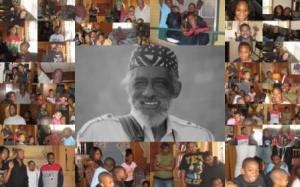 As individuals pass through youth and into adulthood, there is also a stage past adulthood where the cumulative learning of a lifetime is embodied. We call this Elderhood, and although our current systems in the United States have increasingly marginalized those in this group, traditional African societies throughout the continent understood the invaluable resources this life stage represents. In traditional African societies, transitions from one life stage to the next, from birth through elderhood, were marked with specific and predetermined rites of passage.
African Americans are generations removed from these traditions. The increased urbanization of African Americans from Reconstruction through present times fractured this intentional practice of acknowledging and marking. However, the African American community, up through the era of Reconstruction, maintained cognition of the purposefulness of acknowledging and marking these transitions. Racism, social stigmatization, social and economic disenfranchisement, community disorganization and other societal challenges have resulted in an overabundance of negative psychosocial and health outcomes for African Americans. In spite of that or perhaps as a consequence, Africans in the Diaspora – including us in the United States – continue our attempts to hold onto some parts of our cultural legacy, in spite of the mass adoption of alien social and cultural norms.
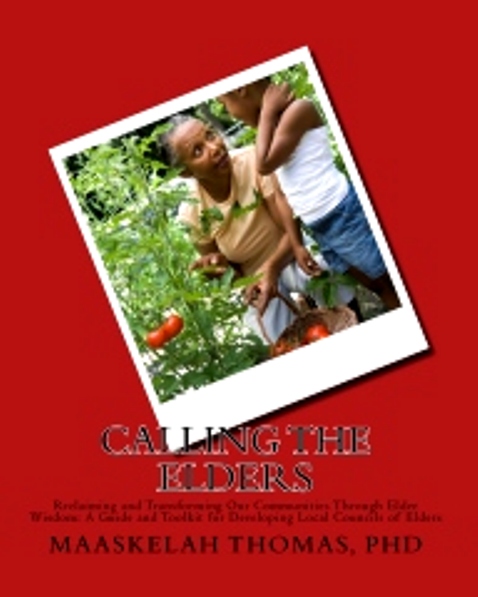 Calling the Elders – Reclaiming and Transforming Our Communities through Elder Wisdom: A Guide and Toolkit for Developing Local Councils of Elders is a simple guidebook, designed for those interested in our continuance. In it you will find one model for community Councils of Elders, along with practical steps and processes for ways to engage our entire community in reconnecting the links that have historically been our strength. The guide contains a brief overview of the historical importance of such Councils, as well as practical steps and tools to plan and develop such a foundational structure in communities throughout the United States and the Diaspora. My desire and ultimate goal is that communities will then be able to utilize these institutions to reconnect our communities – local, nationally and internationally – based on our common ground, as exemplified through the wisdom of our Elders.
Now available at http://on.fb.me/nmI7eH or http://amzn.to/gkOPG7 (or click on the link under “Bookstore” at right sidebar).
 Transformative Concepts Consulting Group