
Visioning for service to individuals and communities is an absolute first step toward the provision of meaningful services and responses to needs. In many, if not most cases, African American human service organizations begin as a result of identified or perceived needs of a local community. An overarching vision statement will include within it acknowledgement of current realities and communally agreed-upon values to imagine a future that truly benefits those to be served. In order to achieve this, it is paramount that the appropriate stakeholders be involved in the development of organizational vision and mission. Unfortunately, many organization founders and leaders approach this most foundational of activities from a much more narrow perspective, even in some cases seeing the organization as an achievement of their own personal goals and objectives. The ultimate, inevitable outcome of this is lack of ongoing and sustaining support, both internal (community) and externally (potential funders and/or supporters).
Human service providers seeking to assist African Americans may be better equipped to provide meaningful service if they have some sense of, some grounding in, the collective sense of history and the social reality shared by African Americans. Historically based and socially constructed meanings and definitions are important both for understanding many of the social and economic challenges of African Americans and for developing meaningful responses to those challenges. These ever emergent, dynamic meanings and definitions guide and articulate the ideas that substantiate the actions and responses of African Americans to everyday reality and experiences. It is not enough for organizational leaders to just assume they know what the “problems” are and then go about the business of designing “solutions.” How providers in organizations serving an African American clientele go about explicating and transforming meaning for their constituents and the larger community has implications for the types and quality of services delivered. These are the premises and principles that ground the ways such organizations are structured for optimal functioning.
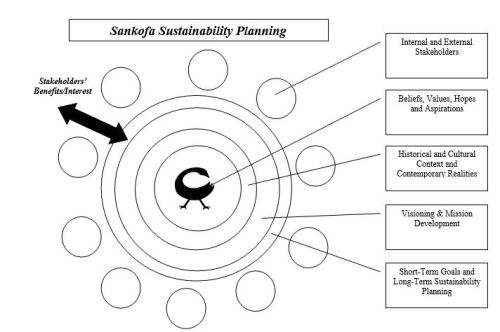
An “Afrocentric” paradigm or approach to human service delivery for African Americans better articulates the value orientation of the constituency being served, as opposed to “generic” practice philosophies and approaches, which carry with them a value orientation that often ignores or fails to fully utilize cultural meaning systems to enhance service development and delivery. What service providers understand and believe about those they serve and the environment in which they live and work (premises) and how they conceptualize what will be most useful for client success (principles) has implications for both practice and service delivery. The importance of appropriate methodologies that take into account local contexts and needs should not be ignored. A human service organization’s capacity is directly tied to how well it is situated to work toward progressive social outcomes for those disadvantaged groups it is established to serve. This is made possible by progressive development philosophies that take into consideration culture, context, and connectedness. A more expansive and integrated development approach must include a multilevel analytical framework that incorporates the strengths of the African American community and collaborative partnerships to achieve deeper level changes. Such approaches give valuable credence to values and meaning systems important to African Americans, resulting in more empowering practice.
 Transformative Concepts Consulting Group
Yes Ms. Maas-tools to self empowerment…we decide how to fix our selves…not some white male folk in a smoky room………………Woooshaw!
Dearest Doc.Org. So pleased to have found you. The poem, When I Am Old brought me sweet tears…
Have now the book, Calling the Elders and moving toward such here in Detroit. Have joined FB site and newsletter. If you know of people in the D doinging the same please help me connect with them. Appreciate you so much.
Hotep Djua Snb (may you have long life, prosperity and health).
Tabia Coulibaly
Dreadchic1@gmail.com
Dearest Doc.Org. So pleased to have found you. The poem, When I Am Old brought me sweet tears…
Have now the book, Calling the Elders and moving toward such here in Detroit. Have joined FB site and newsletter. If you know of people in the D doinging the same please help me connect with them. Appreciate you so much.
Hotep Djua Snb (may you have long life, prosperity and health).
Tabia Coulibaly
Dreadchic1@gmail.com